

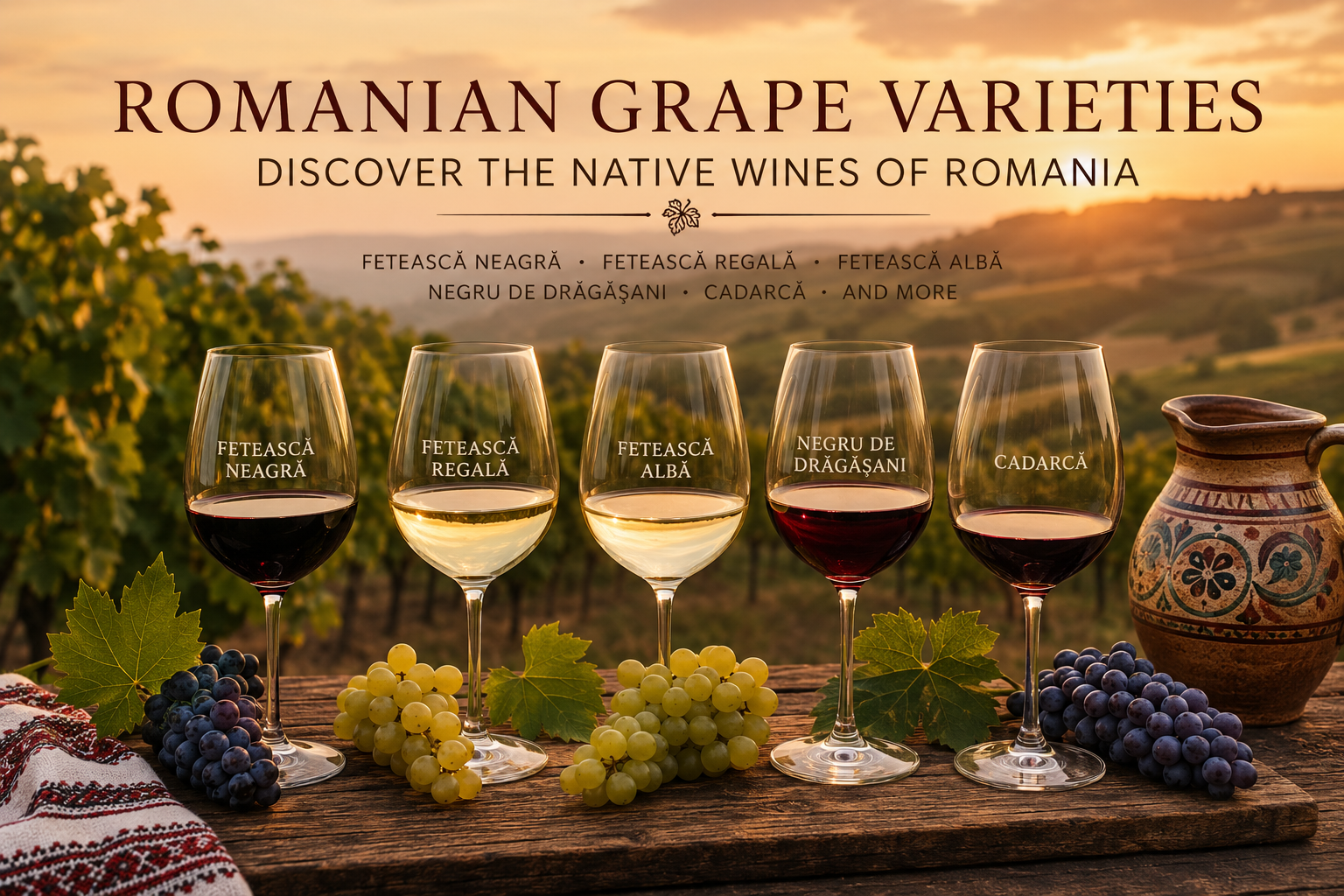
Romanian Grape Varieties – Discover the Native Wines That Define Romania
Romania is one of Europe’s oldest wine-producing countries, with over 2,000 years of winemaking tradition. While many visitors are familiar with international grapes such as Cabernet Sauvignon, Merlot, or Chardonnay, Romania is home to an impressive collection of indigenous grape varieties found nowhere else in the world.
Over the past decade, Romanian wines have gained increasing international recognition, winning prestigious awards and attracting wine enthusiasts eager to discover something authentic.
Many visitors ask questions such as:
- What are the most famous Romanian grape varieties?
- What does Fetească Neagră taste like?
- What is the difference between Fetească Albă and Fetească Regală?
- Is Negru de Drăgășani worth trying?
- Which Romanian wine should I taste first?
This guide answers these questions while introducing Romania’s most important native grape varieties.
Fetească Neagră – Romania’s Signature Red Grape
If Romania has a flagship red grape, it is undoubtedly Fetească Neagră.
This ancient variety has been cultivated for centuries and is considered one of Eastern Europe’s greatest indigenous grapes. Today, it is grown across Romania’s leading wine regions, producing wines that combine elegance, structure, and remarkable aging potential.
What Does Fetească Neagră Taste Like?
Although the style varies depending on the producer and region, most wines display aromas of:
- ripe black cherries
- blackberries
- plums
- dried prunes
- black pepper
- cloves
- dark chocolate
- sweet spices
- vanilla when aged in oak
Well-crafted examples offer silky tannins, balanced acidity, and impressive complexity, making them suitable for both immediate enjoyment and long-term cellaring.
Food Pairing
Fetească Neagră pairs beautifully with:
- grilled steak
- lamb
- venison
- slow-cooked beef
- traditional Romanian dishes
- aged cheeses
Fetească Regală – Romania’s Most Popular White Wine
Unlike many ancient Romanian grapes, Fetească Regală is a relatively modern variety, discovered in Transylvania during the early twentieth century.
Today, it is one of Romania’s most widely planted white grapes and is appreciated for its freshness, versatility, and food-friendly character.
Flavor Profile
Expect aromas of:
- green apple
- pear
- citrus fruits
- white peach
- white flowers
- subtle mineral notes
Its lively acidity makes it an excellent choice for warm weather and contemporary cuisine.
Food Pairing
Fetească Regală complements:
- seafood
- grilled fish
- salads
- sushi
- chicken dishes
- fresh cheeses
Fetească Albă – An Elegant Romanian Classic
Fetească Albă is one of Romania’s oldest native grape varieties and has been cultivated for centuries throughout Romania and the Republic of Moldova.
The wines are known for their elegance, floral aromas, and refined balance.
Typical Aromas
A glass of Fetească Albă often reveals:
- acacia blossom
- wildflowers
- linden flowers
- yellow apple
- apricot
- honey
- fresh herbs
The wines are generally medium-bodied with moderate alcohol and a delicate, refreshing finish.
Negru de Drăgășani – Romania’s Rising Star
Among Romania’s newer indigenous varieties, Negru de Drăgășani has become one of the country’s most exciting discoveries.
Developed through Romanian viticultural research, it consistently produces concentrated, elegant wines with excellent aging potential.
Flavor Profile
Typical aromas include:
- black cherries
- blackcurrants
- blackberries
- ripe plums
- cocoa
- coffee
- black pepper
- smoky notes
Firm tannins and balanced acidity make it an outstanding companion for rich cuisine.
Cadarcă – A Historic Grape Making a Comeback
Known internationally as Kadarka, Cadarcă has deep historical roots in western Romania and the Banat region.
Once regarded as one of Central Europe’s finest red grapes, it is now enjoying renewed attention from ambitious Romanian wineries.
What Does Cadarcă Taste Like?
Expect elegant aromas of:
- sour cherries
- raspberries
- strawberries
- white pepper
- Mediterranean herbs
- delicate spices
Typically lighter than Fetească Neagră, Cadarcă produces vibrant wines with remarkable freshness and gastronomic appeal.
Other Romanian Grape Varieties Worth Discovering
Romania’s wine heritage extends well beyond its best-known grapes.
Tămâioasă Românească
One of Romania’s most aromatic white varieties, famous for its floral perfume, basil notes, and exotic fruit character. It is produced in both dry and sweet styles.
Crâmpoșie Selecționată
Native to the Drăgășani region, this variety produces crisp, mineral-driven wines with refreshing acidity, making it an excellent summer wine.
Busuioacă de Bohotin
Perhaps Romania’s most distinctive rosé grape, offering expressive aromas of rose petals, strawberries, raspberries, and sweet spices.
Zghihară de Huși
A rare indigenous variety appreciated for its vibrant acidity and citrus-driven freshness.
Why Should You Try Romanian Indigenous Wines?
While international varieties can be found almost everywhere, indigenous Romanian grapes offer something truly unique.
Each variety reflects centuries of local tradition, regional terroir, and cultural heritage. They cannot be fully replicated anywhere else in the world, making them a fascinating discovery for wine lovers seeking authentic experiences.
As international recognition continues to grow, Romanian wineries are investing more than ever in preserving and promoting these remarkable native grapes.
Where Can You Taste Romanian Wines in Cluj-Napoca?
Reading about Romanian wines is only the beginning. The best way to understand their diversity is through a professionally guided wine tasting.
At Tanin Cluj, we regularly organize wine tastings dedicated to Romania’s indigenous grape varieties, allowing guests to compare wines from different regions while learning about local terroir, winemaking techniques, and food pairings.
Our guided tastings include insights into:
- Romania’s major wine regions
- indigenous versus international grape varieties
- modern Romanian winemaking
- wine and food pairing principles
- the stories behind Romania’s leading wineries
Whether you are visiting Romania for the first time or you are already passionate about wine, tasting indigenous Romanian wines is one of the country’s most authentic culinary experiences.