
Few beverages have a history as rich as wine. For more than 8,000 years, it has been part of human culture, celebrated not only for its taste but also for the stories it tells about the land where it was grown, the people who crafted it, and the unique character of each vintage.
At first glance, wine seems simple: grapes transformed into alcohol. In reality, every bottle is the result of a carefully controlled process where nature, science, and the expertise of the winemaker come together.
If you’ve ever wondered what wine is, how wine is made, or what the difference is between red and white wine, this guide will walk you through the entire winemaking process in an easy-to-understand way.
What Is Wine?
Wine is an alcoholic beverage made exclusively through the natural fermentation of fresh grapes or grape must. During fermentation, yeast converts the natural sugars found in grapes into alcohol, carbon dioxide, and hundreds of aromatic compounds that give each wine its unique personality.
Although the definition sounds simple, great wine begins long before fermentation starts.
The French have a famous saying: “Wine is made in the vineyard.” They are absolutely right. The grape variety, climate, soil composition, sunlight exposure, rainfall, and harvest timing all play a crucial role in determining the style and quality of the final wine.
Together, these factors are known as terroir, one of the most important concepts in the world of wine.
What Is Wine Made Of?
Many people assume wine contains numerous ingredients or additives. In reality, the main ingredient is surprisingly simple: grapes.
In its purest form, wine is made from only:
- Grapes
- Yeast (either naturally occurring or selected strains)
- Time for fermentation
Winemakers may also add small amounts of sulfur dioxide, a preservative that protects wine from oxidation and unwanted microorganisms. Despite its reputation, sulfur dioxide is used in almost every quality wine around the world and is considered completely safe within the limits established by international food safety regulations.
How Is Wine Made? The Winemaking Process Step by Step
Although every winery has its own philosophy and techniques, the production of wine generally follows several essential stages.
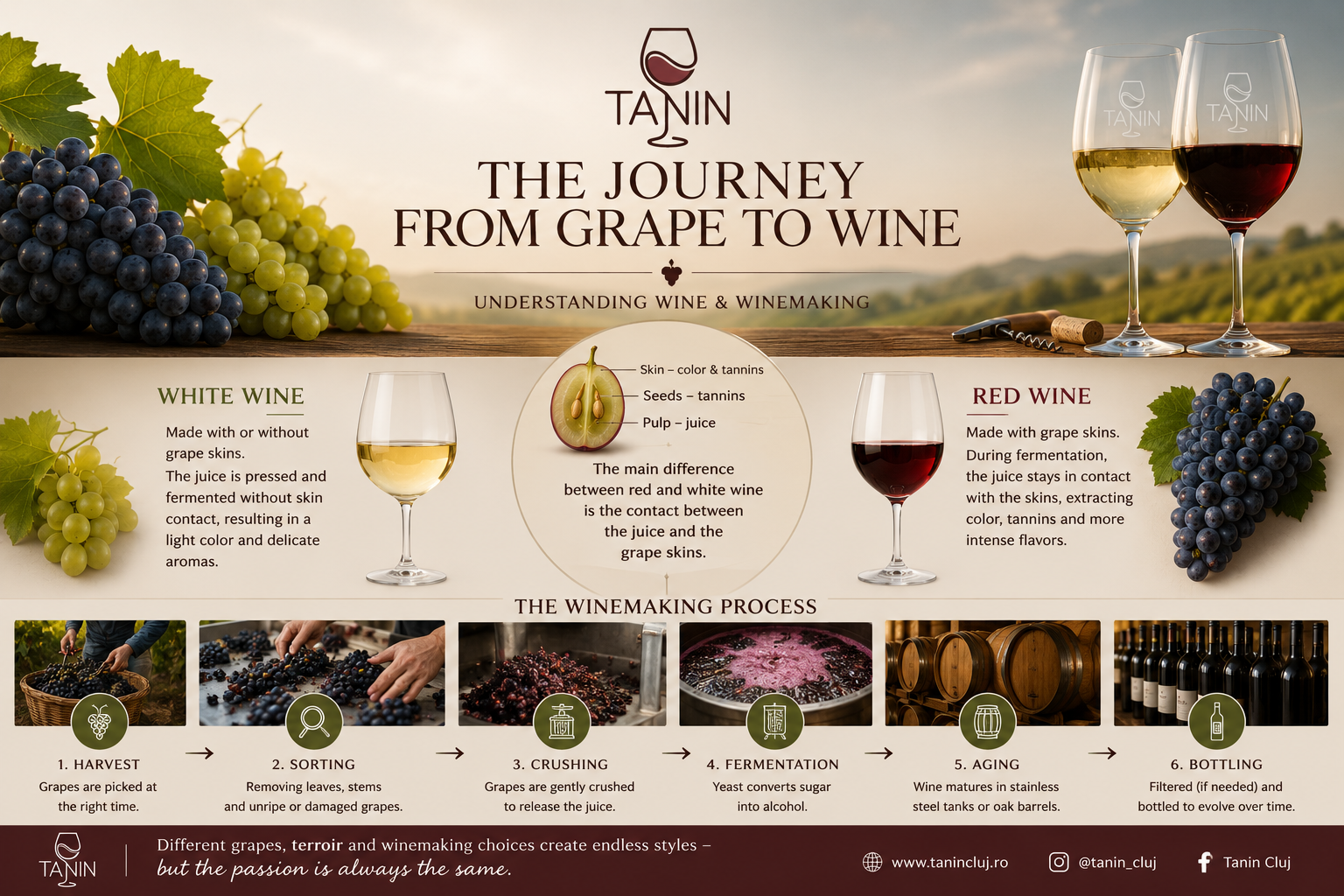
1. Harvesting the Grapes
Everything begins with choosing the perfect moment to harvest.
Even a difference of a few days can significantly affect the final wine.
An early harvest produces wines with higher acidity and lower alcohol, while a later harvest generally results in riper fruit flavors, higher alcohol levels, and fuller-bodied wines.
Before harvesting, wineries carefully analyze:
- Sugar content
- Acidity
- pH level
- Phenolic ripeness of the skins and seeds
Grapes may be harvested by hand or by machine, depending on the vineyard and the desired wine style.
2. Sorting the Grapes
Once harvested, the grapes are carefully inspected.
Damaged, underripe, or diseased berries are removed to ensure that only healthy fruit enters the winemaking process.
Many premium wineries still perform this selection entirely by hand.
3. Destemming and Crushing
The grape stems are removed, and the berries are gently crushed.
The goal is not to completely mash the grapes but to release the juice while avoiding excessive seed breakage, which can introduce bitter flavors.
This is also the point where the production of white and red wine begins to differ.
How Is White Wine Made?
One of the most common misconceptions is that white wine can only be made from white grapes.
In fact, white wine can also be produced from red grapes, because the flesh of most grape varieties is almost colorless. The pigments responsible for the red color are found primarily in the grape skins.
This is why many of the world’s finest sparkling wines, including Champagne, are made from red grape varieties such as Pinot Noir.
Pressing
After crushing, the grapes are pressed immediately.
The juice is quickly separated from the skins, seeds, and stems to prevent the extraction of color and tannins.
The result is a clear grape must ready for fermentation.
Clarification
Before fermentation begins, the grape juice is chilled and clarified to remove suspended solids.
This helps create clean, fresh, and elegant white wines with greater aromatic purity.
Fermentation
White wines are usually fermented in stainless steel tanks at relatively cool temperatures, typically between 12°C and 18°C (54°F–64°F).
Lower temperatures preserve the delicate floral and fruity aromas that characterize many white wines.
Some premium white wines are fermented or aged in oak barrels, adding layers of complexity with notes of vanilla, butter, toast, and spice.
How Is Red Wine Made?
The first stages are similar to white winemaking, but one crucial difference changes everything.
Instead of separating the juice immediately, the grape juice remains in contact with the skins throughout fermentation.
This stage is called maceration.
What Is Maceration?
Maceration is the period during which grape skins remain in contact with the fermenting juice.
During this time, the wine extracts:
- Color
- Tannins
- Aromas
- Phenolic compounds
Generally, the longer the maceration, the deeper the color and the more structured the wine becomes.
Red Wine Fermentation
Red wines ferment at warmer temperatures than white wines, usually between 24°C and 30°C (75°F–86°F).
During fermentation, the grape skins naturally rise to the surface, forming what winemakers call the cap.
To maximize extraction, the cap is regularly mixed back into the wine through techniques such as pump-overs or punch-downs.
Aging
Many red wines are matured in oak barrels for several months or even years.
Oak contributes flavors such as vanilla, cocoa, coffee, cedar, and baking spices while allowing tiny amounts of oxygen to soften the tannins and increase the wine’s complexity.
What Is the Difference Between Red and White Wine?
Contrary to popular belief, the main difference is not the color of the grapes.
The real distinction lies in whether the grape juice remains in contact with the skins during fermentation.
| White Wine | Red Wine |
|---|---|
| Skins are removed immediately after pressing | Skins remain with the juice during fermentation |
| Very low tannin levels | Rich in tannins |
| Higher acidity | Fuller body and stronger structure |
| Floral and fresh fruit aromas | Dark fruit, spice, and earthy aromas |
| Best served chilled | Served slightly below room temperature |
Where Do Wine Color and Tannins Come From?
The natural pigments responsible for the color of red wine are called anthocyanins, and they are found almost entirely in the grape skins.
The skins are also the primary source of tannins.
This is why the length of maceration has such a significant impact on both the color and the structure of a wine.
How Is Rosé Wine Made?
Many people believe rosé is simply a blend of red and white wine.
In reality, that is rarely the case.
Most rosé wines are made from red grapes, but the skins remain in contact with the juice for only a few hours before being removed.
This short maceration gives rosé its beautiful pink color while preserving its fresh, vibrant character.
Winemaking Is the Perfect Balance Between Nature and Science
Centuries ago, wine was produced almost entirely through experience passed down from one generation to the next.
Today, modern wineries can precisely control fermentation temperatures, oxygen exposure, and aging conditions.
Yet despite all technological advances, nature still has the final word.
Two consecutive vintages from the same vineyard can produce remarkably different wines, and that uniqueness is one of the reasons wine continues to fascinate enthusiasts around the world.
Discover Wine Beyond the Theory
Reading about wine is fascinating, but the best way to truly understand it is by tasting it.
At Tanin Cluj, our guided wine tastings go far beyond simply drinking wine. We explore grape varieties, wine regions, terroir, food pairing, winemaking techniques, and the stories behind every bottle.
Whether you are completely new to wine or already an experienced enthusiast, a tasting experience will help you understand why two wines made from the same grape variety can taste completely different.
Join us at Tanin Cluj and discover the fascinating world of wine—one glass at a time.