

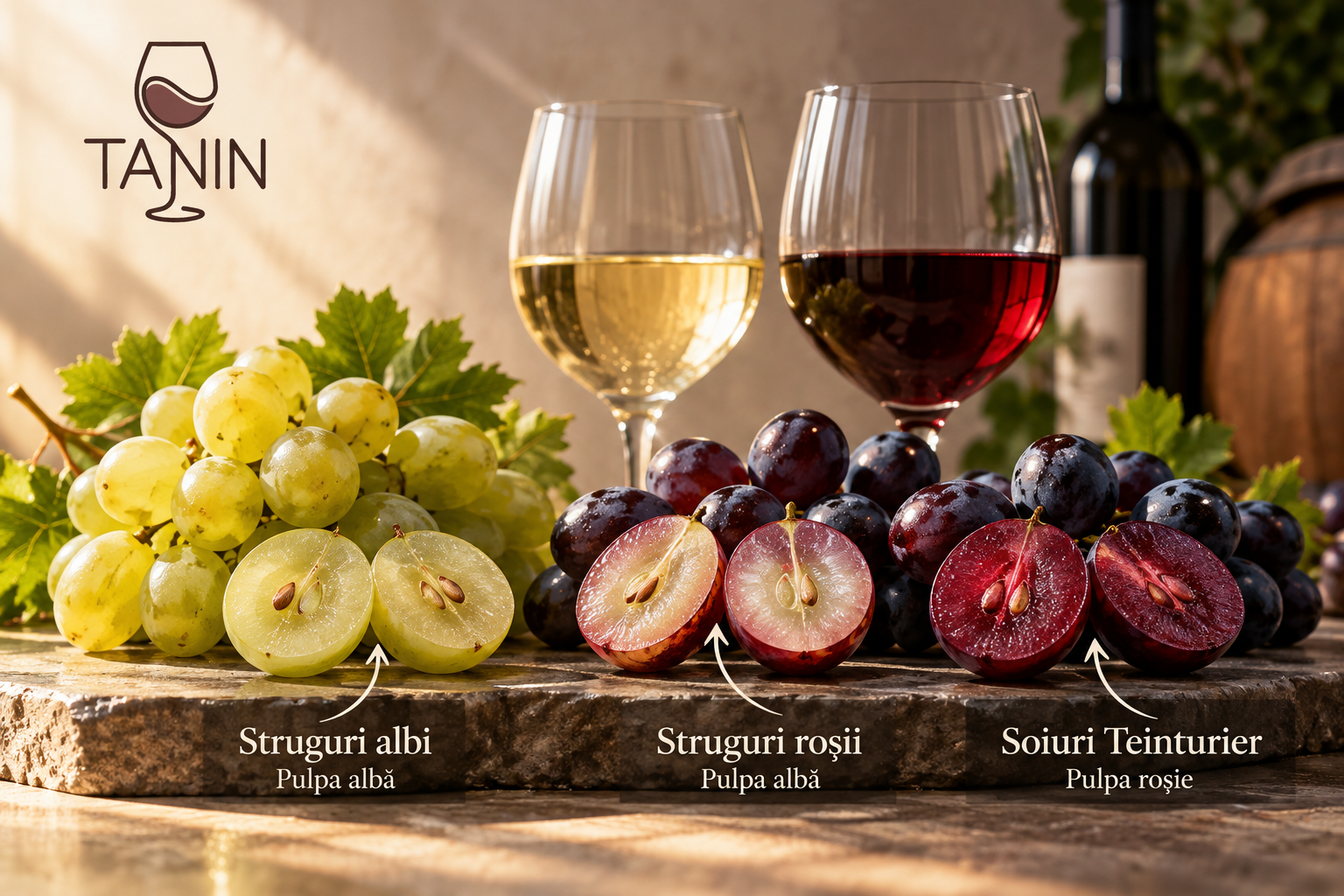
How Is Wine Made? White vs Red Wine, Grape Colours and the Secret of Red-Fleshed Grapes
Have you ever wondered why red wine is red when the inside of most red grapes is actually white? Or why some grapes have red flesh all the way through, while others have dark skins and almost colourless juice?
The answer lies in one of the most fascinating aspects of winemaking: the relationship between grape anatomy, pigments and fermentation.
Although white, rosé and red wines are all made from grapes, the way they are processed makes a significant difference to the final result. The colour of a wine is not simply determined by whether the grapes are red or white. It depends largely on how the grape skins are handled during winemaking.
In this guide, we will explore how white and red wine are made, why most red grapes have white flesh, what makes certain grape varieties red inside and how winemakers control the colour of the wine.
Whether you are a wine enthusiast or simply curious about what is happening inside your glass, here is everything you need to know.
1. How Is Wine Made?
At its simplest, wine is produced through the alcoholic fermentation of grape juice.
During fermentation, yeasts convert the natural sugars found in grapes into alcohol and carbon dioxide. This process also creates hundreds of aroma and flavour compounds that contribute to the character of the finished wine.
However, making wine involves much more than simply fermenting grape juice.
The general winemaking process includes several stages:
- Harvesting: Grapes are picked when they reach the desired balance of sugar, acidity and physiological ripeness.
- Sorting: Damaged, unripe or unwanted grapes and bunch material are removed.
- Destemming and crushing: Depending on the winemaking style, grapes may be separated from their stems and gently crushed.
- Pressing and maceration: The winemaker decides how long the juice should remain in contact with the skins.
- Fermentation: Yeasts transform grape sugars into alcohol, carbon dioxide and other compounds.
- Maturation: The wine may mature in stainless steel tanks, concrete vessels, oak barrels or other containers.
- Clarification and bottling: The wine is stabilised, clarified when necessary and prepared for bottling.
Not every wine follows exactly the same sequence. In particular, the treatment of grape skins is one of the main differences between white and red winemaking.
2. How Is White Wine Made?
White wine is generally made by separating the juice from the grape skins before alcoholic fermentation.
This is one of the most important differences between white and red wine production.
White grapes are usually harvested, sorted, destemmed when appropriate and pressed. The resulting juice is separated from the skins, seeds and other solid material before fermentation begins.
The juice is then clarified, transferred into a fermentation vessel and inoculated with selected yeast or fermented using naturally occurring yeasts, depending on the winemaker’s approach.
Step-by-step: white wine production
Step 1: Harvesting the grapes
White wine grapes are harvested according to the desired style. Winemakers consider sugar concentration, acidity, aromas and the maturity of the fruit.
For fresh, aromatic white wines, preserving acidity can be particularly important.
Step 2: Pressing the grapes
The grapes are pressed to extract their juice. The aim is generally to obtain clean juice while limiting excessive extraction of bitter compounds from skins and seeds.
Step 3: Clarification
The juice may be settled or clarified to remove suspended solids before fermentation. This helps the winemaker control the fermentation process and the wine’s style.
Step 4: Alcoholic fermentation
Yeast converts the sugars into alcohol and carbon dioxide.
White wines are often fermented at relatively cool temperatures to help preserve delicate fruit and floral aromas. Fermentation temperatures vary depending on the grape variety and the desired style.
Step 5: Maturation
After fermentation, white wine may remain in stainless steel tanks to preserve freshness or mature in oak barrels to develop additional texture and complexity.
Some winemakers also use lees ageing, leaving the wine in contact with dead yeast cells. This can add texture, body and complexity.
Step 6: Bottling
After clarification and stabilisation, the wine is bottled.
The result can range from crisp and refreshing wines to rich, creamy and complex styles.
3. How Is Red Wine Made?
Red wine is generally made by fermenting grape juice together with the skins.
This is the crucial difference.
Unlike most white wine production, red winemaking deliberately keeps the grape skins in contact with the fermenting juice. This allows pigments, tannins and other phenolic compounds to be extracted into the wine.
The skins are particularly important because they contain anthocyanins, the pigments responsible for the red, purple and blue colours of many grape varieties.
Step-by-step: red wine production
Step 1: Harvesting and sorting
Red grapes are harvested when they reach the desired ripeness. Sorting helps remove damaged or unsuitable fruit.
Step 2: Destemming and crushing
Grapes are commonly separated from their stems and gently crushed, releasing the juice and exposing it to the skins.
Some winemakers choose to retain a proportion of whole bunches or whole berries, depending on the style they want to create.
Step 3: Maceration and fermentation
The juice, skins and often seeds are placed together in a fermentation vessel.
As fermentation progresses, alcohol is produced and the skins release pigments, tannins and aromatic compounds into the liquid.
This process is called maceration.
The winemaker controls extraction through several factors, including temperature, time and the way the skins are managed during fermentation.
Step 4: Managing the cap
As fermentation produces carbon dioxide, grape skins and other solids are pushed towards the surface, creating a layer known as the cap.
The winemaker needs to manage this layer to encourage controlled extraction.
Common techniques include:
- Punching down (pigeage): Pushing the floating cap back into the fermenting juice.
- Pump-over (remontage): Pumping liquid from the bottom of the tank over the cap.
- Rack and return (délestage): Separating the liquid from the solids and then returning it to the fermentation vessel.
These techniques help determine the wine’s colour, tannin structure and overall character.
Step 5: Pressing
Once the desired level of extraction has been achieved, the wine is separated from the skins and seeds.
The free-run wine and the press wine may be kept separately and blended later, depending on their quality and the winemaker’s objectives.
Step 6: Maturation
Many red wines undergo maturation in stainless steel, concrete or oak barrels.
Oak ageing can contribute aromas such as vanilla, spice and toast, while also influencing the wine’s texture and development.
Step 7: Bottling
After maturation, clarification and stabilisation, the wine is bottled.
The result may be a light, fruity red with soft tannins or a powerful, structured wine with intense colour and ageing potential.
4. Why Do Red Grapes Have White Flesh?
This is one of the most interesting facts about wine.
Most red and black grape varieties have colourless or pale flesh, even though their skins are dark purple, blue or almost black.
If you cut open a Cabernet Sauvignon, Merlot, Pinot Noir or Syrah grape, you will generally find that the inside is pale and translucent rather than red.
Why?
Because the pigments responsible for the colour of most red grapes are concentrated primarily in their skins, not their pulp.
These pigments are called anthocyanins.
Anthocyanins are naturally occurring compounds belonging to the flavonoid family. They are responsible for many of the red, purple and blue colours found in fruits, flowers and other plant tissues.
In most coloured grape varieties, anthocyanins accumulate in the skin as the berries ripen.
The pulp, on the other hand, is mainly made up of water, sugars, organic acids and other compounds that contribute to the grape’s flavour and structure.
This is why squeezing a typical red grape produces juice that is almost colourless or only slightly tinted.
An easy experiment
Take a dark red grape, cut it in half and look at the inside.
You will probably see a pale, almost translucent pulp surrounded by a dark skin.
Now gently squeeze it.
The juice will usually be clear or very lightly coloured.
This simple experiment explains why grape skin contact is so important in red wine production.
Without sufficient contact between the juice and the coloured skins, a red grape variety may produce a very pale wine.
5. How Does Red Wine Get Its Colour?
Red wine gets most of its colour from anthocyanins extracted from grape skins during maceration.
The amount and type of pigment extracted depend on several factors:
- Grape variety and its natural anthocyanin content.
- Ripeness and condition of the grapes.
- Length of skin contact.
- Fermentation temperature.
- Extraction techniques used by the winemaker.
- Wine pH and the chemical transformations that occur during fermentation and ageing.
This explains why two wines made from different red grape varieties can have very different colours.
For example, Pinot Noir is often relatively pale and translucent, while wines made from Syrah, Malbec or certain other varieties can have a much deeper colour.
It is also important to understand that colour does not automatically indicate quality. A pale red wine can be just as complex and well made as a deeply coloured one.
6. Are There Red Grapes With Red Flesh? Meet the Teinturier Grapes
Yes! And this is where things become particularly interesting.
Although most red grape varieties have pale flesh, there is a special group of grapes in which the pulp is also red.
These varieties are known as teinturier grapes, sometimes called dyer grapes.
The term comes from the French word teinturier, associated with dyeing or colouring.
Unlike ordinary red grapes, teinturier varieties accumulate anthocyanins not only in their skins but also in their flesh.
As a result, when you cut one open, you can see that the pulp itself is red or purple.
When pressed, these grapes can produce naturally coloured juice, even before prolonged skin maceration.
This is a relatively unusual characteristic among wine grapes and makes teinturier varieties particularly interesting to winemakers.
Why do teinturier grapes have red flesh?
The difference comes down to the way their cells produce and accumulate anthocyanins.
In most coloured grape varieties, anthocyanin production is concentrated in the skin.
In teinturier varieties, the pigmentation process also takes place in the pulp.
This is related to genetic differences affecting the regulation of anthocyanin biosynthesis.
The result is a grape with coloured skin and coloured flesh, rather than the typical dark skin and pale pulp.
Famous examples of teinturier grape varieties
Here are some interesting examples:
Alicante Bouschet
<text>One of the best-known teinturier varieties in the world. It was developed in France in the nineteenth century by Henri Bouschet, using Petit Bouschet and Grenache as parent varieties. Its intensely pigmented flesh makes it useful for producing deeply coloured wines and for blending with other varieties.</text>
Gamay de Bouze
A French teinturier variety with pigmented flesh. It is one of the examples of grapes that can contribute colour to red wine blends.
Gamay Fréaux
Another teinturier grape, notable for its red pulp and its historical use in winemaking.
Rubired
A teinturier hybrid developed in the United States, particularly associated with California. It is used for its strong colouring potential.
Dakapo
A teinturier variety developed in Germany, also valued for its ability to contribute colour to red wines.
Saperavi
A Georgian red grape variety famous for its deeply coloured juice and pulp. The name is associated with the Georgian word for dye or colouring. Saperavi is particularly interesting because it produces intensely coloured wines and has a long history in Georgian winemaking.
These varieties demonstrate that not all red grapes behave in the same way.
Are teinturier grapes used to make wine?
Absolutely.
One of their most important applications is increasing the colour intensity of red wines.
Winemakers may use teinturier grapes in blends to give a wine a deeper and more intense colour.
Some are also used to produce varietal wines, where the grape itself is the main component of the finished wine.
Their use depends on the region, local winemaking traditions and the style the producer wants to achieve.
7. Can You Make White Wine From Red Grapes?
Yes! And this is another surprising fact about winemaking.
White wine can be made from red-skinned grapes, provided the juice is separated from the skins quickly enough to avoid significant pigment extraction.
A famous example is Blanc de Noirs Champagne.
The expression Blanc de Noirs literally means “white from black”.
It refers to white sparkling wine produced from dark-skinned grape varieties, most commonly Pinot Noir and Pinot Meunier in Champagne.
The grapes are pressed carefully, and the juice is separated from the skins before substantial colour extraction occurs.
This is why the finished wine can be white or pale gold even though it comes from black-skinned grapes.
The key lesson is simple:
The colour of a wine is not determined only by the colour of the grape skin. It also depends on how the grapes are processed.
8. How Is Rosé Wine Made?
Rosé wine is generally produced from dark-skinned grapes using limited skin contact.
Unlike red wine, where maceration is usually longer, rosé production aims to extract only a controlled amount of pigment.
There are several ways to make rosé.
Short maceration: The juice remains in contact with the skins for a relatively short period, allowing a limited amount of colour to be extracted. The skins are then removed and fermentation continues with the juice alone.
Direct pressing: Dark-skinned grapes are pressed with very limited skin contact, resulting in a pale rosé style.
Saignée method: During red wine production, a portion of the juice is drained from the fermenting vat at an early stage. This juice is then fermented separately to produce rosé, while the remaining red wine may become more concentrated.
The final colour can range from very pale salmon and onion skin to vivid pink and raspberry.
9. What Is the Difference Between White, Red and Rosé Winemaking?
The main difference is how much contact the grape juice has with the skins.
| Winemaking style | Skin contact | Typical result |
|---|---|---|
| White wine | Usually removed before fermentation | Pale colour, generally little tannin |
| Red wine | Skins ferment together with the juice | Red or purple colour, more tannin and structure |
| Rosé wine | Limited skin contact | Pink colour and usually lighter tannin structure |
| Blanc de Noirs | Dark-skinned grapes pressed with limited pigment extraction | White wine from red grapes |
The differences are not simply about colour. Skin contact also affects the wine’s tannins, aroma compounds, texture and overall structure.
10. Does Grape Skin Also Affect the Taste of Wine?
Yes. Grape skins are responsible for much more than colour.
They contain several compounds that influence the sensory characteristics of wine.
Anthocyanins are responsible for red and purple pigments.
Tannins contribute a drying sensation and a feeling of structure in the mouth. They are found in grape skins and seeds, as well as in oak used during ageing.
Aromatic compounds and their precursors contribute to the wine’s aroma profile and can influence how fruity, floral or complex it smells.
Other phenolic compounds influence a wine’s mouthfeel, stability and development over time.
This is why skin contact is such an important decision in winemaking. The winemaker is not simply deciding how dark the wine should be, but also how much structure, texture and complexity to extract.
11. The Next Time You Drink Wine, Remember This
The next time you enjoy a glass of red wine, remember that its colour probably came from the grape skins, not the pulp.
The next time you drink a white wine made from Pinot Noir, remember that red grapes can produce white wine.
And if you ever have the chance to cut open an Alicante Bouschet or Saperavi grape, take a closer look. You might be surprised to discover that the inside is just as colourful as the outside.
Wine is full of fascinating details, and understanding how it is made makes every glass a little more interesting.
At Tanin Cluj, wine discovery is about more than tasting different bottles. It is about understanding grape varieties, wine regions, winemaking traditions and the stories behind the wines.
If you are visiting Cluj-Napoca or simply want to explore the world of wine in a more interactive way, discover the wine-tasting experiences organised at Tanin.
Explore wine. Discover new flavours. Understand what is in your glass.
Discover Tanin Cluj and explore our wine-tasting experiences
Frequently Asked Questions About Wine Production
How is white wine made?
White wine is generally made by pressing grapes and separating the juice from the skins before alcoholic fermentation. Yeast then converts the natural sugars in the juice into alcohol.
How is red wine made?
Red wine is generally made by fermenting grape juice together with the skins. During maceration, pigments, tannins and other compounds are extracted from the skins, giving the wine its colour and structure.
Why are red grapes white inside?
Most red grape varieties accumulate anthocyanins, the pigments responsible for their colour, mainly in their skins. Their flesh remains pale, which is why squeezing a typical red grape produces almost colourless juice.
Are there grapes with red flesh?
Yes. They are known as teinturier grapes or dyer grapes. Unlike most red grape varieties, they accumulate anthocyanins in both their skins and flesh.
What are examples of red-fleshed grape varieties?
Examples include Alicante Bouschet, Gamay de Bouze, Gamay Fréaux, Rubired and Dakapo. Saperavi is another well-known red-fleshed variety.
What is a teinturier grape?
A teinturier grape is a grape variety with coloured flesh as well as coloured skin. Its red or purple pulp contains anthocyanins, making its juice naturally pigmented.
Can you make white wine from red grapes?
Yes. If the juice is separated from the dark skins before significant pigment extraction, red-skinned grapes can produce white wine. Blanc de Noirs Champagne is a well-known example.
Why is red wine red?
Red wine gets most of its colour from anthocyanins extracted from dark grape skins during maceration and fermentation.
What gives wine its colour?
Wine colour comes primarily from grape pigments, especially anthocyanins in red wines. The grape variety, skin contact, winemaking methods, acidity and ageing all influence the final colour.
How is rosé wine made?
Rosé is generally made from dark-skinned grapes with limited skin contact. The short extraction period allows some colour to enter the juice without producing the deeper colour and structure typical of most red wines.
Do all red grapes produce red wine?
No. Red-skinned grapes can produce white, rosé or red wines depending on how they are processed. White wine can be made by separating the juice from the skins before substantial pigment extraction.
What is the difference between red and white wine fermentation?
In conventional red winemaking, fermentation takes place with the grape skins, allowing colour and tannins to be extracted. In conventional white winemaking, the juice is usually separated from the skins before fermentation.
Does the grape pulp determine wine colour?
Usually not. For most red grape varieties, the skins are the main source of colour. However, teinturier grapes are an exception because their flesh also contains colour pigments.