

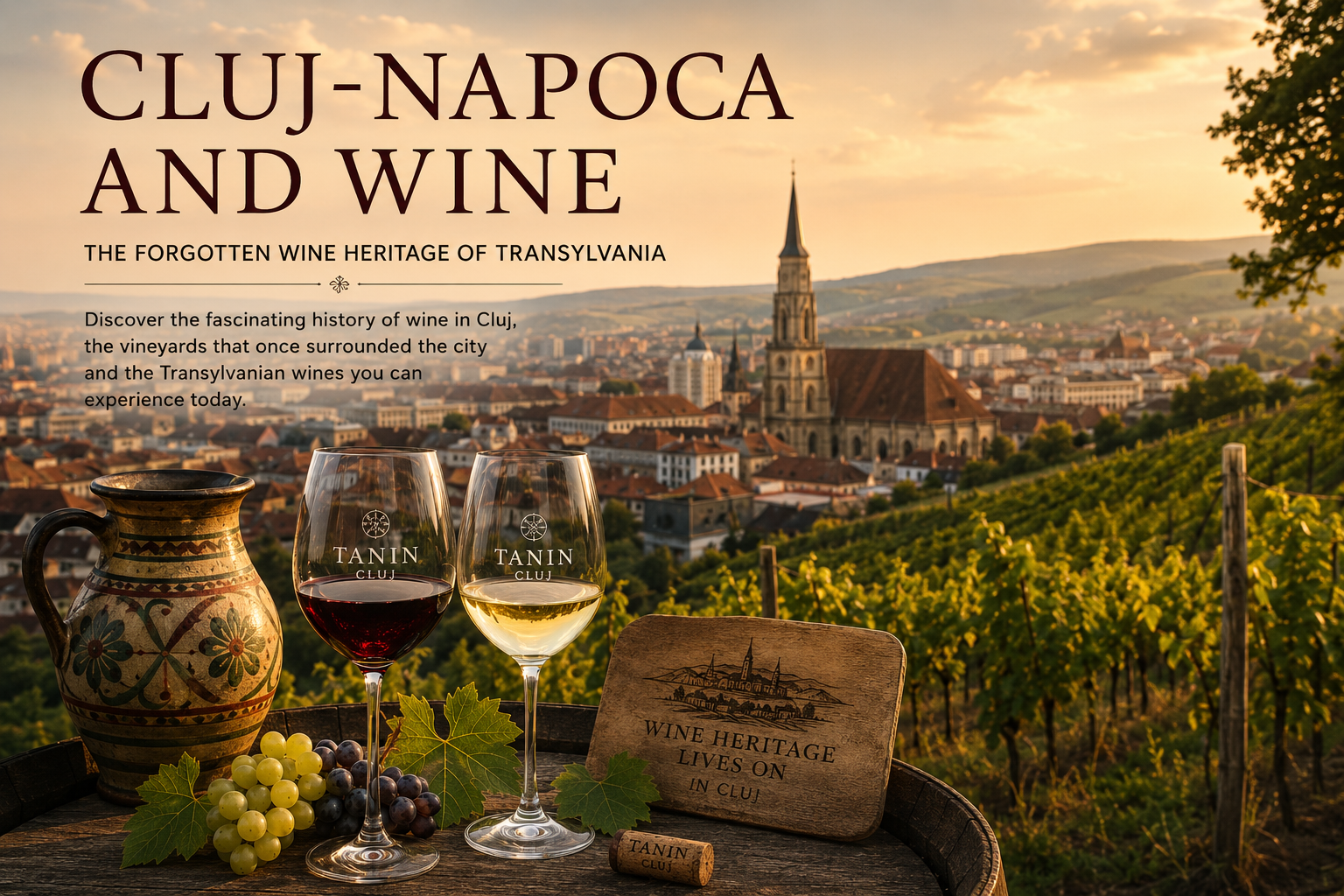
Cluj-Napoca and Wine – The Forgotten Story of a Historic Wine Region
Today, Cluj-Napoca is known as one of Eastern Europe’s most vibrant cultural and technological hubs. Every year, thousands of visitors come to experience its medieval architecture, lively cafés, world-famous festivals, and dynamic atmosphere.
What many travelers don’t realize is that Cluj also has a remarkable wine heritage.
Centuries before Cluj became Romania’s innovation capital, the hills surrounding the city were covered with vineyards that supplied wine to noble families, monasteries, and merchants throughout Transylvania.
Today, although urban development has transformed much of the landscape, this rich wine tradition continues through nearby wineries and wine experiences that celebrate Transylvania’s unique terroir.
If you are searching for:
- Wine tasting in Cluj-Napoca
- Transylvanian wines
- Romanian wine history
- Vineyards near Cluj
- Things to do in Cluj-Napoca
…understanding the city’s wine heritage is the perfect place to begin.
Did You Know Cluj Was Once Surrounded by Vineyards?
During the Middle Ages and throughout the Habsburg period, vineyards stretched across many of the hills that today form Cluj’s residential neighborhoods.
Historical documents describe vineyards on slopes that are now known as:
- Feleacu
- Hoia
- Gruia
- Someșeni
- Baciu
- the surrounding hills overlooking the Someș Valley
Wine production was an important part of local life, and many wealthy families owned vineyards that supplied wine for both personal consumption and commercial trade.
The city’s favorable location, moderate continental climate, and rolling hills created ideal conditions for cultivating grapevines.
The Birthplace of Modern Viticulture Education in Romania
Cluj has also played an important role in the scientific development of Romanian viticulture.
For generations, the city’s academic institutions contributed to research in agriculture, horticulture, and grape cultivation.
The nearby University of Agricultural Sciences and Veterinary Medicine (USAMV Cluj-Napoca) continues this tradition today, educating future winemakers, viticulturists, and wine specialists while conducting research that supports Romania’s modern wine industry.
This strong connection between education and winemaking has helped preserve Transylvania’s unique wine identity.
Why Is Transylvania Such a Good Wine Region?
Compared to southern Romania, Transylvania enjoys a cooler climate with significant day-night temperature variation.
These conditions allow grapes to ripen slowly while preserving their natural acidity.
The result is wines that are:
- elegant
- fresh
- aromatic
- balanced
- food-friendly
This cooler climate has become increasingly valuable as global temperatures continue to rise.
Today, many wine professionals consider Transylvania one of Eastern Europe’s most promising cool-climate wine regions.
Indigenous Romanian Grapes Thrive in Transylvania
Although international varieties are widely planted, many wineries around Cluj produce outstanding wines from indigenous Romanian grapes.
Visitors can discover varieties such as:
Fetească Regală
Originally discovered in Transylvania, Fetească Regală has become Romania’s flagship white grape.
Expect crisp acidity, floral aromas, and refreshing citrus notes.
Fetească Albă
An ancient Romanian variety producing elegant wines with delicate floral character and remarkable balance.
Fetească Neagră
Although more commonly associated with southern Romania and Moldova, excellent expressions are increasingly being produced by Transylvanian wineries.
The cooler climate often results in fresher styles with refined tannins and vibrant fruit.
The Vineyards Near Cluj-Napoca
Within a relatively short drive from Cluj, visitors can discover several exciting wine producers and emerging vineyards.
Some of Romania’s most respected wineries source grapes from Transylvania, where limestone soils, volcanic influences, and cooler temperatures create wines with exceptional freshness and minerality.
Whether you’re planning a weekend trip or simply looking for an authentic local experience, exploring the vineyards around Cluj offers a completely different perspective on the region.
Wine Tourism Is Growing in Cluj
Wine tourism has become one of the fastest-growing segments of experiential travel.
More international visitors are searching for authentic local experiences beyond traditional sightseeing.
Instead of simply visiting landmarks, travelers increasingly want to:
- taste regional wines
- meet local producers
- learn about Romanian wine culture
- discover indigenous grape varieties
- enjoy food and wine pairings
Cluj is perfectly positioned for this trend, combining a vibrant urban atmosphere with easy access to some of Transylvania’s finest wine regions.
Why Join a Wine Tasting in Cluj-Napoca?
You don’t need to travel hundreds of kilometers to visit multiple wineries.
A professionally guided wine tasting allows you to experience the diversity of Romanian wines in one evening while learning the fascinating stories behind each bottle.
At Tanin Cluj, guests explore carefully selected wines from across Romania, with a particular focus on Transylvania and indigenous grape varieties.
Every tasting includes:
- guided explanations by experienced wine professionals
- carefully selected Romanian and international wines
- insights into Romania’s wine regions
- food pairings
- stories behind each winery and grape variety
Whether you are completely new to wine or already an enthusiast, a guided tasting provides a deeper understanding of Romania’s extraordinary wine culture.
Wine and Cluj’s Cultural Identity
Wine has always been closely connected with Cluj’s multicultural identity.
Throughout history, Romanian, Hungarian, Saxon, and Austrian communities all contributed to the development of viticulture in Transylvania.
This cultural diversity continues today, reflected not only in the wines themselves but also in the cuisine, architecture, and hospitality that visitors experience throughout the region.
Wine remains one of the most authentic ways to understand Transylvania’s history.
Frequently Asked Questions
Is Cluj-Napoca a wine region?
While Cluj itself is now primarily an urban center, it has a long history of viticulture, and the surrounding Transylvanian region remains one of Romania’s most important cool-climate wine areas.
Are there vineyards near Cluj?
Yes. Several vineyards and wineries can be reached within a short drive from Cluj-Napoca, making wine tourism an excellent day-trip activity.
What wines should I try in Cluj?
Visitors should look for Fetească Regală, Fetească Albă, Fetească Neagră, Pinot Noir, Riesling, and sparkling wines produced in Transylvania.
Is wine tasting a good activity for tourists in Cluj?
Absolutely. Wine tastings offer an authentic cultural experience while introducing visitors to Romania’s indigenous grape varieties and centuries-old winemaking traditions.
Can I experience Romanian wines without visiting multiple wineries?
Yes. Guided wine tastings allow guests to compare wines from different Romanian regions in a single experience while learning about terroir, grape varieties, and food pairings.
Discover Transylvania One Glass at a Time
Behind Cluj-Napoca’s lively streets lies a wine story that stretches back centuries.
From medieval vineyards that once covered the surrounding hills to today’s award-winning wineries across Transylvania, wine remains an essential part of the region’s cultural identity.
If you are looking for one of the most authentic experiences in Cluj-Napoca, a guided wine tasting offers the perfect introduction to Romanian wine, indigenous grape varieties, and the fascinating history of Transylvanian viticulture.
At Tanin Cluj, we invite you to discover this story—one glass at a time.